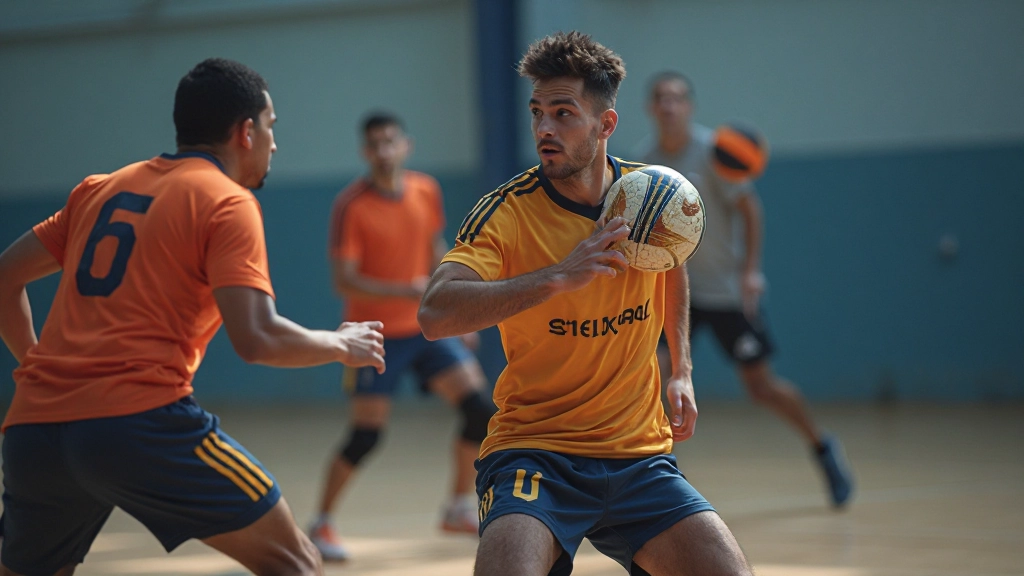
Fundamental Passing Techniques for Beginners
Master the essential passing methods that form the foundation of handball team play. This guide covers wrist passes, shoulder passes, and bounce passes with detailed instruction on proper grip, arm positioning, and timing for effective team coordination.
Understanding Passing Fundamentals
Passing forms the cornerstone of handball strategy and team coordination. Effective passing enables teams to move the ball quickly, create scoring opportunities, and maintain offensive momentum. Beginning players must develop foundational skills that support both accuracy and consistency, regardless of game conditions or defensive pressure.
The quality of team passing directly influences overall performance. Players who develop reliable passing techniques contribute significantly to their team's ability to execute tactical plans. This foundation supports development of more advanced techniques as players progress in their handball journey.
Key Passing Principles
Successful passing combines proper body positioning, controlled arm movement, and timing awareness. Players should focus on developing consistency before attempting advanced variations or increased pace.
The Wrist Pass Technique
The wrist pass represents one of the most frequently used passing methods in handball. This technique emphasizes controlled wrist motion combined with proper arm positioning, allowing players to deliver accurate passes across various distances.
Grip and Hand Position
Proper grip forms the foundation of effective wrist passing. Players should hold the ball with fingers spread naturally across its surface, maintaining firm control without excessive tension. The ball rests in the hand with the palm slightly open, allowing the wrist to move freely during the passing motion.
Arm Positioning
The passing arm should bend at approximately 90 degrees at the elbow, with the shoulder slightly rotated back. This positioning allows for smooth motion and controlled release. The non-passing arm provides balance and helps maintain proper body alignment throughout the passing action.
-
Wrist Snap
The final motion involves a controlled snap of the wrist that propels the ball forward with backspin, creating a stable flight path.
-
Follow-Through
Fingers should naturally extend toward the target as the ball leaves the hand, creating a smooth follow-through motion.
-
Body Rotation
Coordinating shoulder and hip rotation with arm motion generates power and accuracy for longer passes.

Shoulder Pass and Bounce Pass Techniques
The Shoulder Pass Method
The shoulder pass generates greater power and distance compared to the wrist pass. This technique involves a larger arm movement with increased shoulder engagement, making it valuable for passes covering greater distances or situations requiring increased velocity.
Execution begins with the ball positioned at shoulder height, with the elbow bent and shoulder rotated backward. The arm extends forward in a controlled arc, with the wrist providing final direction control. The full-body motion, including hip and shoulder rotation, contributes significantly to pass power and accuracy.
-
Initial Positioning
Position the ball at shoulder height with proper grip and balanced stance. The feet should be positioned slightly wider than shoulder-width for stability.
-
Arm Extension
Extend the arm forward in a smooth arc, coordinating motion with trunk and hip rotation to generate power from the entire body.
-
Release and Follow-Through
Release the ball with fingers extended toward the target, completing a smooth follow-through motion that demonstrates proper technique execution.
The Bounce Pass Technique
The bounce pass involves directing the ball toward the floor so it bounces to a teammate. This passing method proves valuable when direct passes face defensive obstruction or when tactical positioning requires an indirect approach to ball movement.
The bounce pass uses similar fundamental mechanics to other passing techniques, with the primary difference being the target point. Instead of aiming directly at a teammate, the player directs the ball toward a specific point on the court where it will bounce upward to the intended receiver.
-
Bounce Point Selection
Choose bounce points carefully based on receiver position and defensive situation. The bounce should occur approximately two-thirds of the way between passer and receiver.
-
Force Application
Apply appropriate force to ensure the ball bounces to the correct height for the receiver to handle comfortably without additional adjustment.
-
Timing Consideration
Account for bounce time when coordinating passes with teammate movements. The receiver must be prepared to handle the ball after the bounce occurs.

Educational Information
This content provides educational information about handball passing techniques. It represents general guidance based on standard coaching methodology. Individual circumstances, skill levels, and training environments vary considerably. Players should work with qualified coaches who can provide personalized instruction appropriate to their specific situation. Coaches should adapt all techniques to match individual athlete capabilities and training goals. Always prioritize safety and proper supervision during all training activities.
Developing Passing Accuracy and Team Coordination
Consistent practice directly supports development of passing accuracy and reliability. Players who dedicate time to fundamental skill practice develop the muscle memory and positioning awareness necessary for effective game performance.
Practice Approaches for Skill Development
Structured training sessions incorporating repetitive passing drills support skill development. Players benefit from practicing passes at various distances and angles, building adaptability for different game situations. Partner drills, wall passing exercises, and small-sided games all contribute to skill progression.
Coordination with Team Movement
Effective passing requires awareness of teammate positioning and movement patterns. Players should develop understanding of how passes facilitate team offensive strategies and support tactical execution.
Receiving and First Touch Considerations
While this guide emphasizes passing techniques, successful team play requires equal attention to receiving skills. Players should understand how pass quality affects receiving difficulty and develop complementary receiving techniques that allow quick ball control and immediate decision-making.
Team passing effectiveness improves when all players understand fundamental techniques and practice coordinated movements. Coaches should emphasize how individual passing skills contribute to overall team performance and tactical implementation.
Summary and Next Steps
Fundamental passing techniques form the foundation of handball skill development. The wrist pass, shoulder pass, and bounce pass each serve distinct purposes within team play, with proper execution depending on consistent practice and understanding of fundamental mechanics.
Beginning players should prioritize developing reliable execution of basic techniques before attempting advanced variations. Coaches can support this progression by providing clear instruction, constructive feedback, and structured practice opportunities. As players develop proficiency with fundamental techniques, they can progress to more specialized passing methods and advanced tactical applications.
Team success depends on players who consistently execute fundamental skills while maintaining awareness of tactical objectives. Continued practice, coaching guidance, and deliberate skill refinement support the development of accomplished handball players capable of executing sophisticated team strategies.