Start Your Journey
Navigation
Start Your Journey

Defensive Strategy and Position Training

Understanding how teams organize defensive structures, coordinate player positioning, and develop communication protocols forms the foundation of competitive handball. This comprehensive examination explores defensive formations, positioning concepts, and tactical awareness that enable teams to manage offensive plays effectively.

Understanding Defensive Formations

Defensive formations represent organized structures that teams employ to manage offensive threats. Different formations serve specific purposes depending on opponent characteristics, player abilities, and tactical objectives. The most common approach involves arranging defenders in patterns that create defensive pressure while maintaining positional coverage.

A 6-0 formation, where six players form a compact defensive line, emphasizes central court control and reduces shooting space. This approach works well against teams relying on outside shooting. The 5-1 formation, incorporating one player positioned further back, provides depth and handles fast-breaking situations differently. Teams select formations based on systematic analysis of opposing teams' offensive tendencies.

The 4-2 formation creates different spatial dynamics by positioning four players in the main line and two covering wings. This arrangement particularly addresses threats from wing players while maintaining central defensive strength. Each formation variation presents distinct advantages and requires specific positioning discipline from participating players.

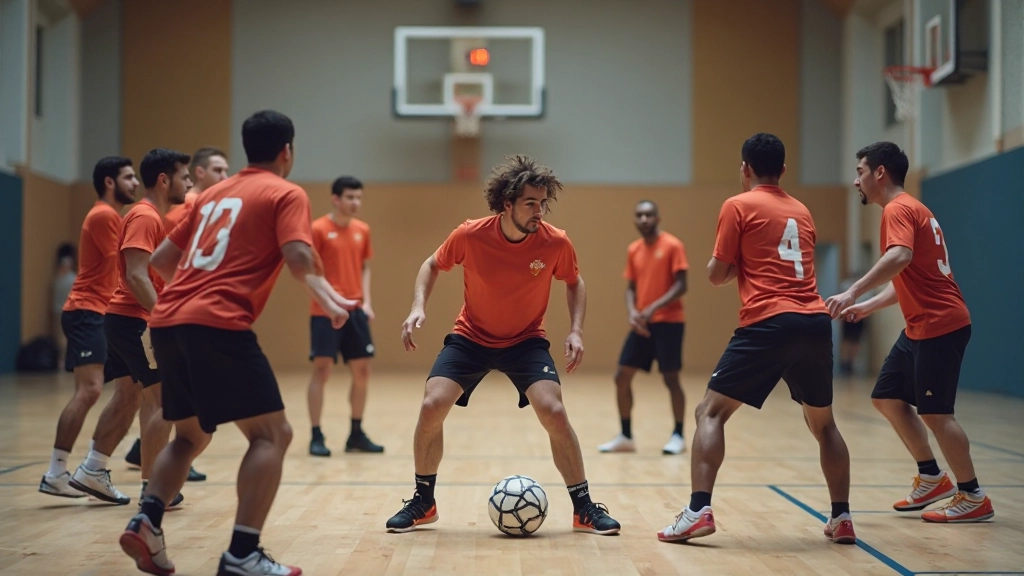
Professional handball team in defensive formation during training session

Individual Position Responsibilities

Each defensive position carries specific responsibilities that contribute to overall team structure. Center back players typically manage the central court area, positioning themselves to intercept passes and block direct shooting lanes. This role requires constant awareness of ball movement and offensive player positioning.

Wing defenders cover the outside lanes where wing players operate. These positions demand lateral mobility and the capacity to react quickly to movement shifts. Wing defenders must balance aggressive pressure against offensive players while avoiding fouls that result in penalty shots.

Pivot defense involves managing the area where pivot players operate, typically closer to the goal. Defenders in this position must apply physical pressure while maintaining positioning discipline. Understanding distance management and timing becomes essential, as incorrect spacing can lead to easy scoring opportunities.

Key Positioning Elements

  • Distance management between defender and offensive player
  • Body positioning that restricts shooting angles
  • Anticipatory movement based on ball trajectory
  • Communication signals to coordinate team responses
  • Recovery movement when offensive players move laterally

Communication Protocols and Team Coordination

Effective communication transforms individual positioning efforts into coordinated defensive systems. Players must verbally communicate position changes, opponent switches, and tactical adjustments throughout play. Experienced teams develop standardized terminology that allows rapid information exchange without excessive talking that might distract focus.

Hand signals supplement verbal communication, providing visual confirmation of positioning changes and defensive adjustments. Teams establish consistent signals for common situations such as marking switches, defensive pressure increases, or formation adjustments. This visual language enables communication across court distances where voice clarity might fail.

Communication Fundamentals

Regular communication during practice sessions develops automatic communication habits that transfer to competitive matches. Players learn to anticipate teammate positions and respond to positioning changes without requiring explicit instructions. This automaticity allows defenders to focus on offensive player movements while maintaining formation discipline.

Defensive line synchronization depends on players maintaining consistent spacing intervals. When offensive players attempt to create separation, defenders must adjust positioning collectively rather than individually. Coordinated adjustment prevents gaps that offensive players exploit for scoring opportunities.
Educational Information

This content provides educational information about handball defensive strategies and positioning concepts. It does not constitute professional coaching advice or replace guidance from qualified handball coaches. Specific training approaches should be developed in consultation with certified coaching professionals who can assess individual team characteristics and player capabilities.

Implementing defensive strategies requires proper technical instruction, progressive training methodology, and individual player assessment. Coaches should modify approaches based on player skill levels, team experience, and competitive context. Training modifications and safety considerations vary based on participant age, experience, and physical capabilities.

Developing Positional Awareness and Tactical Thinking

Defensive positioning develops through systematic practice emphasizing spatial awareness and opponent reading skills. Players must learn to process multiple information sources simultaneously: ball location, teammate positions, offensive player movements, and formation objectives.

Training sessions that isolate defensive positioning elements allow players to focus on specific skills before applying them in complex game situations. Controlled practice drills establish foundational positioning habits. Progressive increases in complexity gradually introduce multiple offensive players, faster pace, and situational variations.

Video analysis of competitive matches helps players understand how positioning decisions affect game outcomes. Reviewing successful defensive sequences reinforces effective positioning habits. Analyzing situations where defensive breakdowns occurred provides learning opportunities without the pressure of live competition.

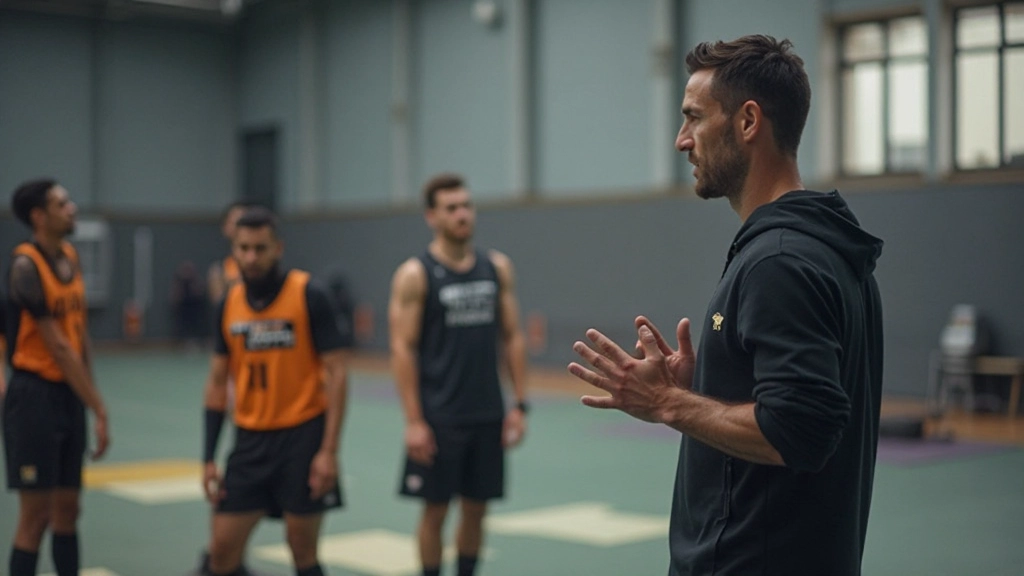
Handball coach demonstrating defensive positioning concepts to players during training

Applying Positioning Concepts to Match Situations

Different match situations demand positioning adjustments beyond standard formation structures. When defending against fast breaks, defensive positioning prioritizes rapid recovery and positioning in passing lanes. When opponents possess superior outside shooting, formations adjust to emphasize perimeter coverage while maintaining sufficient central protection.

Late-match situations where score differentials narrow often require defensive intensity adjustments. Coaches may increase defensive pressure by adjusting positioning to create more aggressive coverage, accepting higher risk in exchange for increased pressure on offensive execution. These tactical adjustments require players to understand the reasoning behind positioning changes.

Situation-Based Positioning Adjustments

  • Fast break defense: Wider positioning and deeper court coverage
  • Outside shooting threats: Increased perimeter pressure and restricted shooting space
  • Pivot dominance: Concentrated positioning around goal area with additional help coverage
  • Fatigue management: Strategic positioning that reduces movement demands without sacrificing coverage
  • Foul prevention: Adjusted spacing that maintains pressure while avoiding unnecessary contact

Successful match application depends on players understanding not only where to position themselves but why specific positioning serves tactical objectives. This deeper understanding allows players to make intelligent positioning adjustments when unexpected situations emerge during competition.